SEEING AGAINST SEEING
Photography: Alexey Yurenev
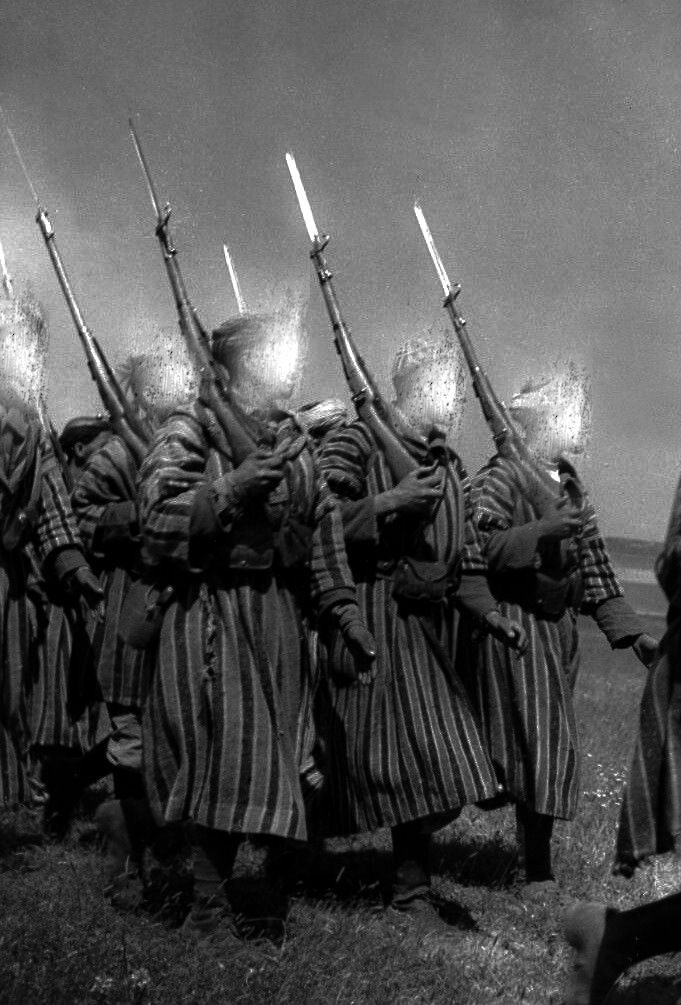
Seeing Against Seeing is an artist book by Alexey Yurenev, created in collaboration with designer Teun van der Heijden and the Anti-Krieg-Museum in Berlin. The book is one outcome of Silent Hero, Yurenev’s long-term visual research project exploring his grandfather’s unspoken experience of World War II. The project confronts a central challenge of photography: how to represent what has been lost, silenced, or erased from history. While photojournalism seeks to show us events we could not witness, generative artificial intelligence offers another possibility-the ability to imagine events that never happened, but could have. Yurenev employs a custom-trained generative adversarial network (GAN) using thousands of WWII-era soldier portraits. The resulting synthetic images are haunting and grotesque. They resemble war photography but lack any claim to direct witnessing. Instead, they visualize states of fear, trauma, and absence. Placed in dialogue with Ernst Friedrich’s seminal 1924 anti-war book War Against War!, the AI images echo Friedrich’s unflinching photographs of World War I while refusing the clarity of evidence. They are not documentation, but hallucination. In their distortions lies another kind of truth-conflict rendered as archetype, as psychic terrain, recalling Goya’s etchings or Doré’s Inferno. Seeing Against Seeing extends beyond its pages. The book incorporates transcripts from Yurenev’s film No One Is Forgotten, in which WWII veterans encounter these same synthetic images. Confronting them directly, the veterans recognize details, summon memories, and renegotiate their personal histories in dialogue with machine vision.
The book also features Bogna Konior’s essay, War in the Age of Infinite Evidence: On AI-Generated War Photography, which situates the project within broader questions of technology, memory, and the politics of vision. Ultimately, Seeing Against Seeing becomes a meditation on how we see, what remains unseen, and how the act of seeing itself might be turned against the myths of war. -Publisher